

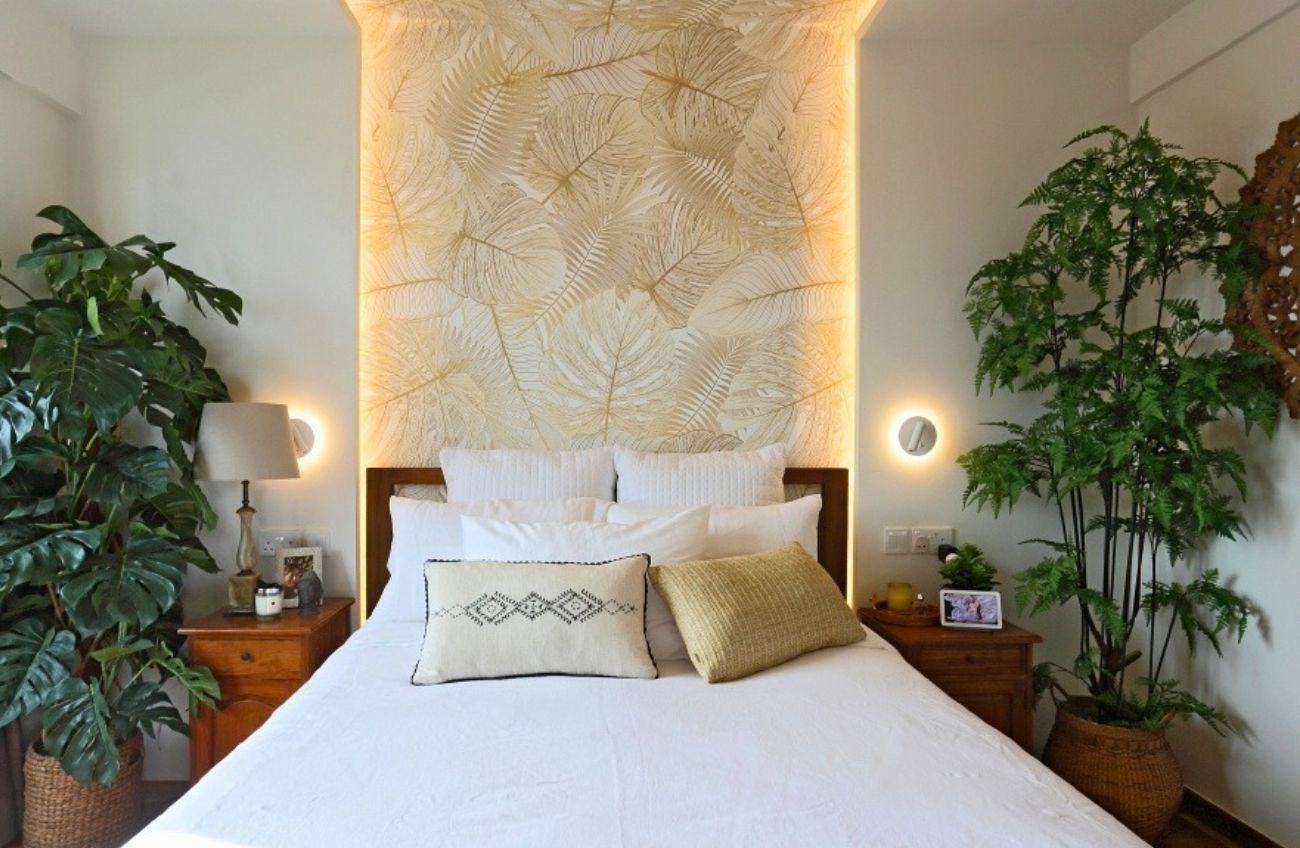
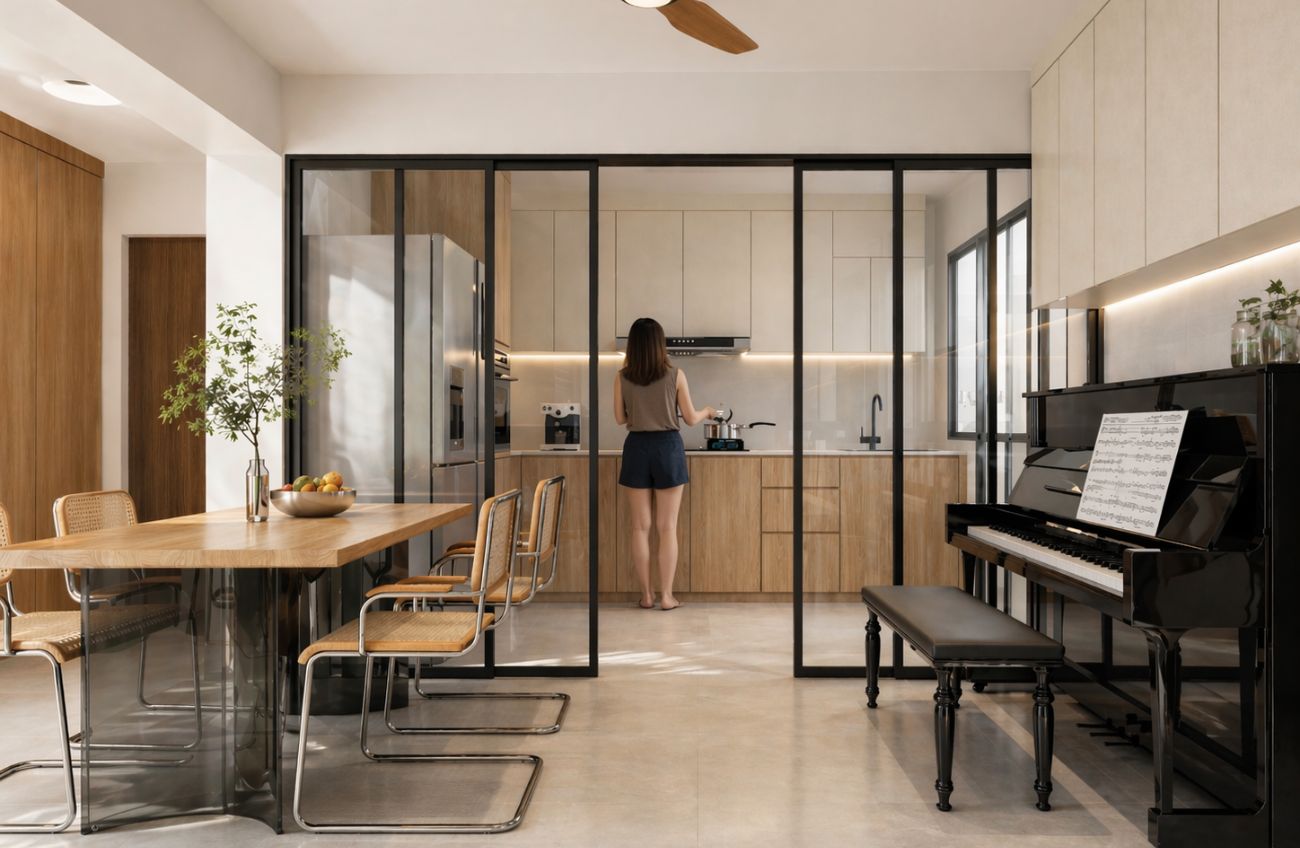
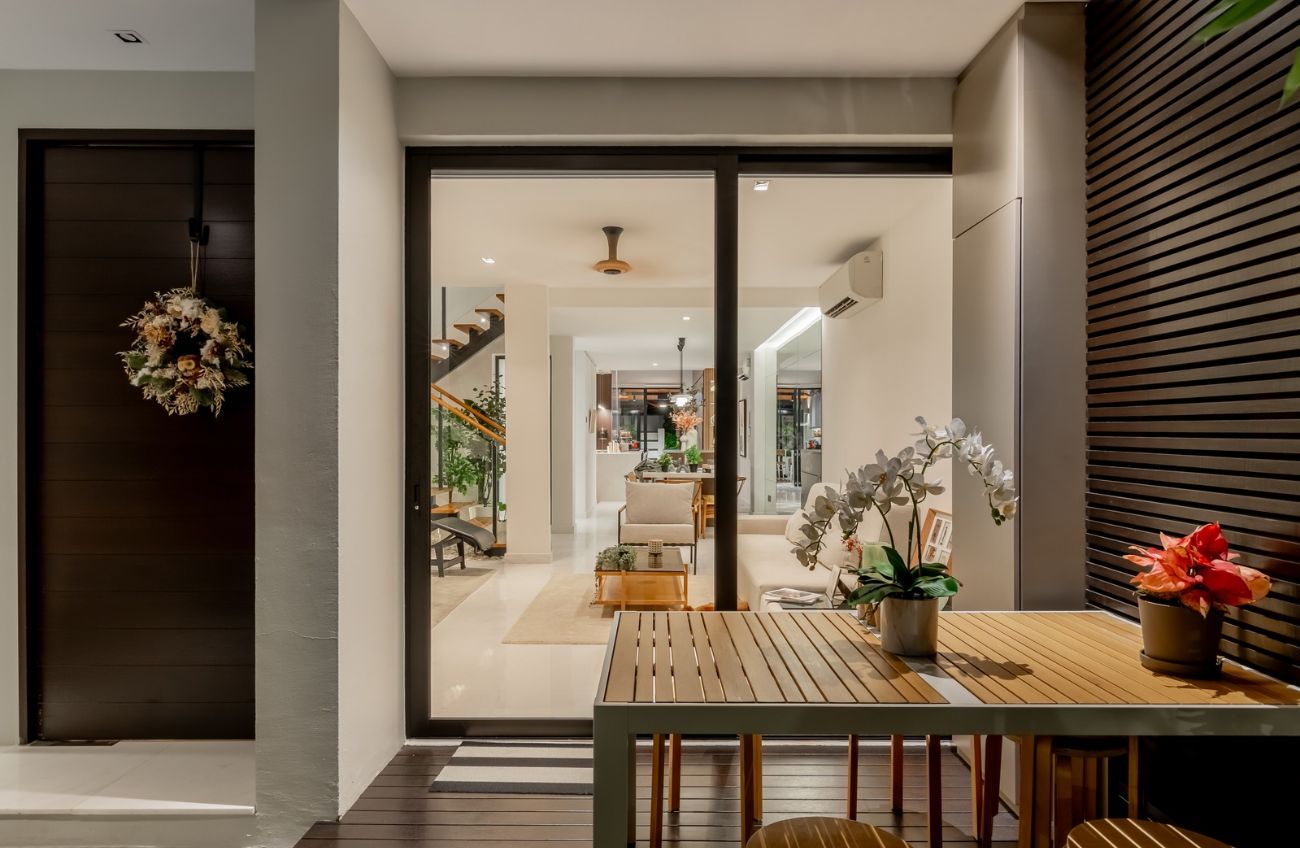
The most successful residential interior design in Singapore is rarely the home with the most design features.
It is the home where daily routines feel easier.
You know where your keys go. The dining table does not become permanent storage. The kitchen works when two people are cooking. There is enough light at your desk. Luggage has a proper home. The sofa fits the room rather than dominating it.
These details may seem ordinary, but they are exactly what turn an attractive interior into a comfortable home.
Here is how to approach residential design from the inside out.
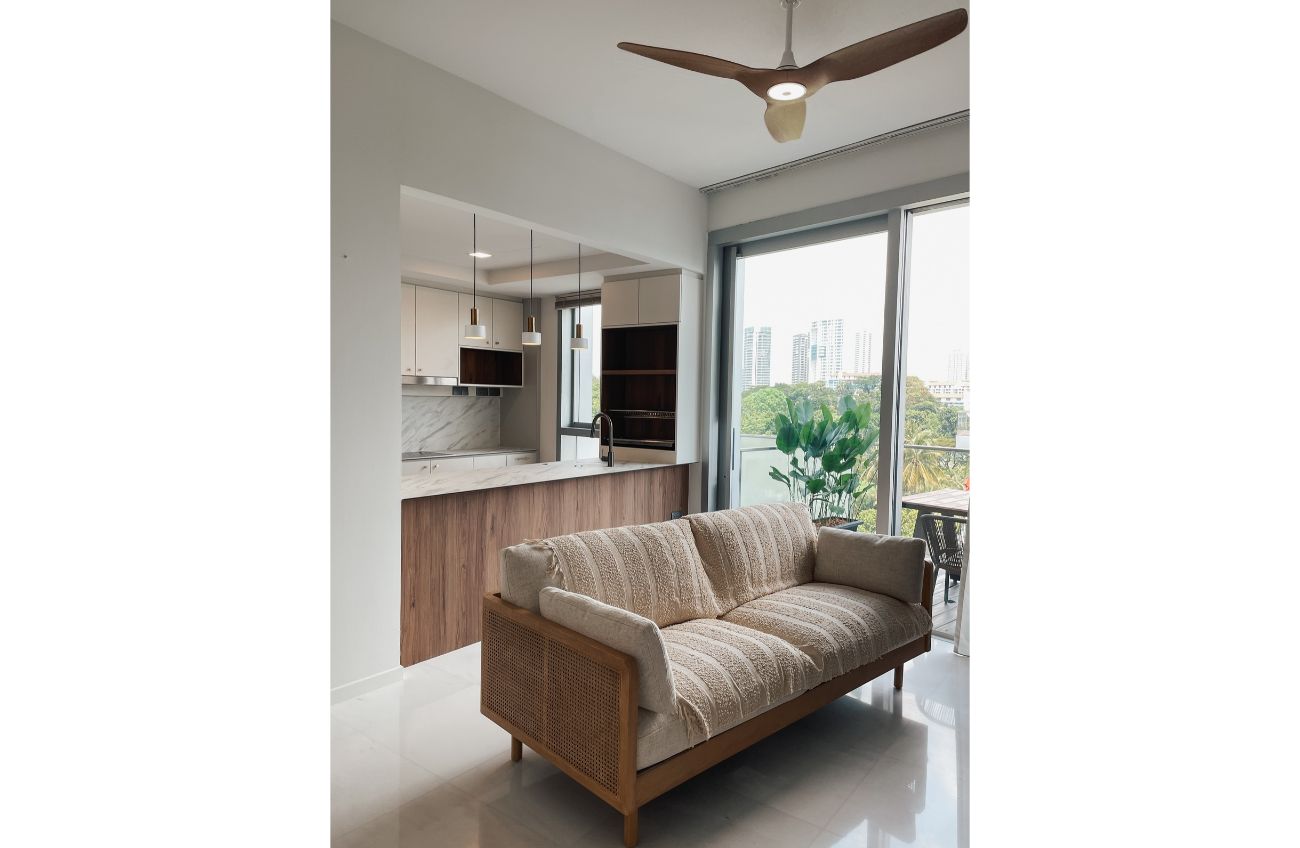
Interior design should solve three things simultaneously:
Function: Does the home support daily activities?
Comfort: Is it pleasant to live in for long periods?
Identity: Does it feel personal rather than like a showroom?
A beautiful home that constantly creates inconvenience has not fully solved the design problem.
This is why residential interior design Singapore projects should begin with lifestyle analysis before colour palettes and decorative features.
Imagine a normal weekday:
This reveals pressure points that floor plans alone may not show.
For example, if everyone enters the home carrying several objects, the entrance needs more than an attractive shoe cabinet. It may also need a landing surface, concealed storage and charging access.
Residential homes in Singapore do not all require the same approach.
Priorities frequently include:
Homeowners can explore Monoloft's dedicated HDB Interior Design Singapore page for HDB-specific planning.
Condo interiors may need:
Monoloft's Condo Interior Design Singapore service page explores this property type in more detail.
Larger floor areas do not automatically make planning easier.
The challenge becomes creating continuity between multiple rooms and levels while making sure spaces do not become underused.
Flow describes how naturally people move through a home.
A practical residential layout avoids:
One useful test is to imagine carrying groceries from the entrance to the kitchen.
Then imagine moving laundry.
Then imagine guests arriving.
If these movements constantly cross obstacles, rethink the layout before construction starts.
Storage works best when it feels integrated into architecture rather than added afterwards.
Useful approaches include:
But avoid turning every available wall into cabinetry.
Too much carpentry can make a compact home feel heavier.
The objective is not maximum storage volume. It is enough well-organised storage in the right locations.
Singapore homes increasingly need rooms to perform more than one function.
For example, a dining table can support occasional laptop use, but a household with two full-time remote workers probably needs a more deliberate workspace.
Before adding decorative lighting, understand the natural light in the property.
Observe:
Avoid unnecessarily blocking valuable daylight with tall solid partitions.
Glass, open shelving and lighter visual treatments may preserve brightness while still creating zones.
Good home interior design in Singapore should not rely on one ceiling fixture.
For comfortable overall visibility.
For activities such as cooking, reading or working.
For atmosphere and visual emphasis.
The ability to change lighting combinations throughout the day creates a home that feels more adaptable.
A material sample should be evaluated with more than your eyes.
Ask:
A carefully controlled palette generally looks more refined than a home filled with competing surfaces.
Monoloft’s existing guide to residential interior design trends in Singapore covers ideas such as multifunctional living, Scandinavian influences, smart-home integration, warm neutrals and natural materials.
But a trend should be used because it suits the household, not simply because it is popular.
For example, an open kitchen may look spacious, but it may not suit someone who cooks intensively and prefers stronger separation.
Design should filter trends through lifestyle.
When the eye has somewhere to rest, the materials and furniture you intentionally selected become more noticeable.
A strong residential interior design Singapore concept should remain usable even as circumstances change.
Consider:
This does not mean designing a generic home.
It means avoiding unnecessary decisions that make future adaptation difficult.
A useful design brief should include more than inspiration photographs.
Share:
Also explain what frustrates you about your current home.
Pain points can be more valuable to a designer than a long list of stylistic references.
Before construction, ask:
These questions make residential interior design in Singapore more practical without removing creativity.
What is residential interior design? +
Residential interior design focuses on the planning, functionality and visual character of homes such as HDB flats, condominiums and landed properties.
What should I prepare before meeting an interior designer? +
Prepare your floor plan if available, household requirements, budget range, renovation priorities, existing furniture measurements and a small collection of visual references.
How can I make a small Singapore home feel larger? +
Improve furniture proportions, reduce visual clutter, use vertical storage, preserve natural light and avoid unnecessary divisions.
Should every room use the same colours? +
Not necessarily. However, repeating selected colours, materials or finishes helps create continuity between rooms.
How do I choose a residential interior designer in Singapore? +
Review relevant completed projects, understand the services included, communicate your needs clearly and compare the proposed design approach rather than looking only at the lowest quotation.
Good residential interior design Singapore planning begins with life, not decoration.
Understand the routines first. Solve movement and storage. Plan lighting properly. Select durable materials. Then create the visual identity.
That sequence produces a home that can look refined while still being comfortable on an ordinary Tuesday evening.
Homeowners considering a complete renovation can explore Monoloft’s interior design and renovation services and residential project portfolio for further inspiration.